Why Communities Across North America Invite Jeanette Pierce to Speak About Place
Over the past few months, I've had the opportunity to speak at International Placemaking Week, join a panel discussion for UN Habitat, lead workshops with community leaders, and spend time with organizations thinking deeply about the future of their cities.
On paper, those experiences couldn't have been more different. Different audiences. Different communities. Different goals. But I kept walking away with the same realization.
No matter where I am, people are asking some version of the same question:
How do we help more people care about this place?
Sometimes it's framed as attracting and retaining talent. Sometimes it's about supporting small businesses. Sometimes it's about downtown revitalization, civic engagement or helping people feel more connected to where they live. The words change. The challenge doesn't.
After nearly twenty years leading City Institute, I've come to believe that one of the biggest opportunities communities have isn't simply telling better stories to the outside world. It's helping the people who already live there better understand, and believe in, the place they call home.
Detroit Was My Classroom
When I started City Institute in 2006, Detroit wasn't a city that people were pointing to as a model. The national conversation focused on decline, disinvestment and challenges. Those challenges were real, but they were only part of the story.
I knew another Detroit. A city of entrepreneurs, artists, neighborhood leaders, nonprofit organizations, innovators and people who cared deeply about their communities. I wanted more people, especially locals, to see that city.
What started as walking tours eventually became learning journeys, leadership exchanges, workshops, consulting projects and keynote presentations. Along the way, I realized we weren't just teaching people about Detroit, but we were helping them build a stronger relationship with it. That idea has shaped everything we've done ever since.
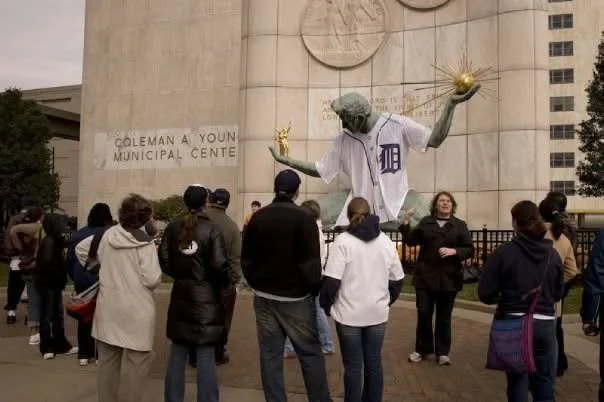
Jeanette founded City Institute in 2005 to challenge the national conversation around Detroit focused on decline, disinvestment and challenges. It has evolved to help locals and newcomers build a stronger relationship with their city.
The Conversations Keep Sounding Familiar
One of my favorite parts of speaking is that every audience teaches me something.
I've spoken with mayors, CEOs, economic developers, university leaders, chambers of commerce, downtown organizations, philanthropies and community advocates. They all bring different perspectives. But the conversations almost always come back to a familiar set of questions.
How do we attract talented people? How do we help them stay? How do we support local businesses? How do we create a stronger sense of belonging? How do we encourage people to become ambassadors for their own community?
I've become convinced those aren't separate challenges, but are actually deeply connected. People are more likely to invest in a place when they understand it. They're more likely to support local businesses when they know the people behind them. They're more likely to stay when they feel like they belong. And they're more likely to tell others about their community when they're proud of it.
Different Audiences. Shared Lessons.
That's why I love speaking to so many different types of organizations.
Sometimes the conversation is about Detroit. Presentations like Detroit Beyond the Headlines explore how Detroit has evolved from the largest municipal bankruptcy in U.S. history to becoming recognized for innovation, entrepreneurship, arts, culture and creative problem-solving—while also acknowledging the work that still lies ahead.
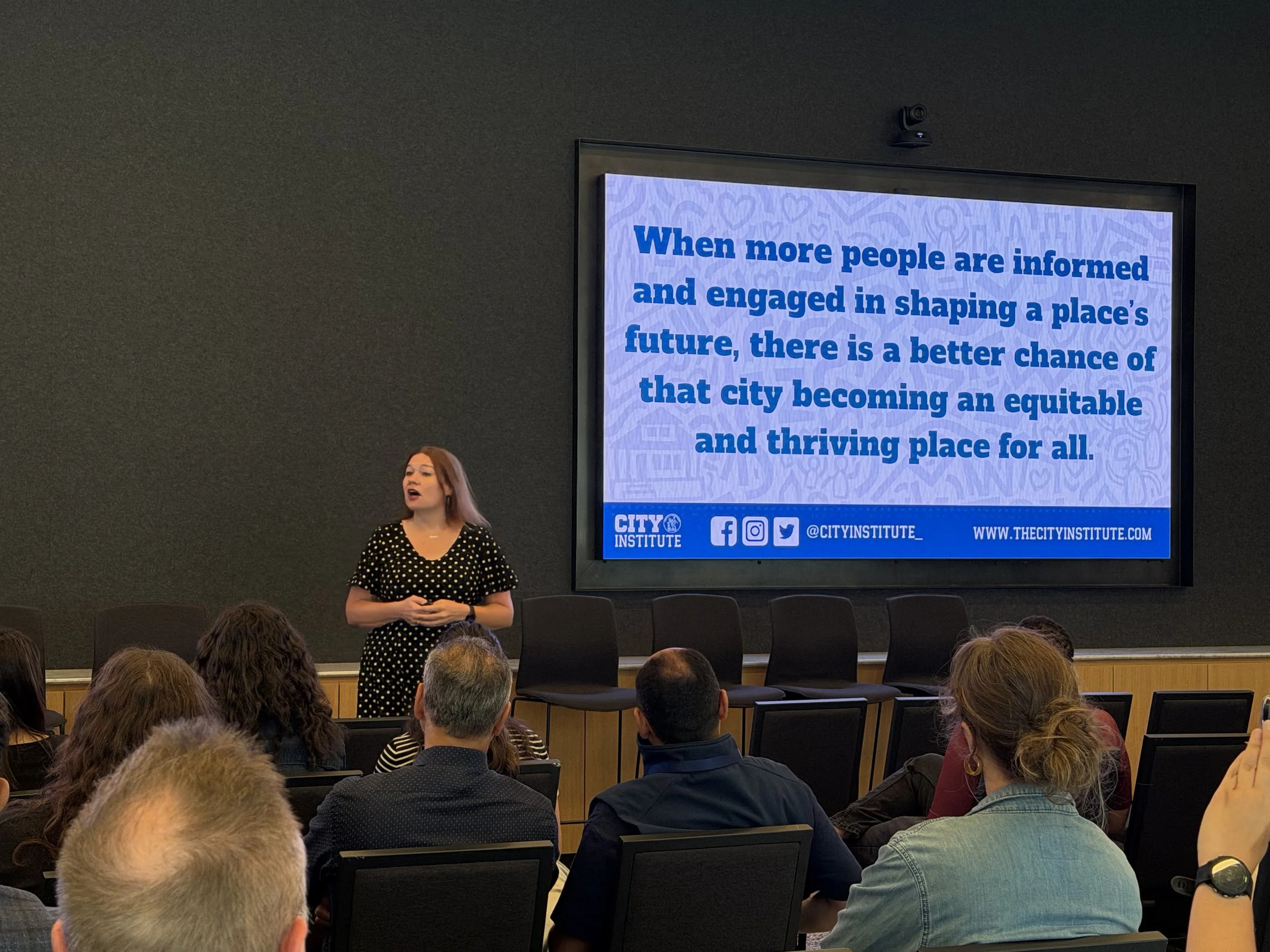
Jeanette Pierce led the closing workshop for the 2026 International Placemaking Week - “Place-Based Storytelling: A Practical Workshop for Community Leaders”
Other times, the focus is on helping communities tell their own stories. Through workshops like Civic Storytelling for Economic Impact, participants learn practical ways to identify community assets, strengthen civic pride, support local businesses and create more meaningful connections between people and place.
Increasingly, employers and universities are asking a different question altogether. How can we help employees or students feel connected to the community beyond the office or campus?
It's a conversation I find incredibly exciting because attraction is only the beginning. Helping people build relationships with a place is what encourages them to stay. The examples may be different, but the underlying lesson is always the same that people care about places they understand.
Learning Goes Both Ways
One of the things I enjoy most about keynote speaking and workshops is that they aren't one-way conversations.
Yes, I'm sharing ideas and lessons from nearly twenty years of working in Detroit and with communities across North America. But I'm also listening. Every city has strengths that others can learn from. Every community is experimenting with new approaches. Every audience asks questions that challenge my own thinking and help shape the work we do at City Institute.
Some of my favorite ideas have come from conversations after the presentation ends. That's one of the reasons I continue saying yes to speaking opportunities.
They're not just opportunities to teach, but more so opportunities to learn.
Looking Ahead
Over the past two decades, I've had the privilege of speaking at more than 300 events across North America, including the World Economic Forum's Urban Transformation Summit, Atlantic's CityLab Conference, Canada's National Cities Summit, UN Habitat, International Placemaking Week, the Oregon Main Street Conference, Detroit Policy Conference, the Midwestern Higher Education Compact (MHEC), leadership programs, universities, chambers of commerce and community organizations.
Each invitation has reinforced something I believe more strongly today than ever before. Communities don't become stronger simply because people move there but because people build relationships—with neighbors, small businesses, public spaces, local history and each other.
That's why I continue saying yes to keynote stages, workshops and learning journeys.
Every community has stories worth discovering. And when people understand those stories, they're more likely to invest in the future of the place they call home.
“Every community has stories worth discovering. And when people understand those stories, they’re more likely to invest in the future of the place they call home.”
Bringing These Conversations to Your Community
Whether you're planning a conference, leadership retreat, annual meeting or workshop, I enjoy working with organizations to create presentations that are practical, interactive and tailored to each audience.
Popular speaking topics include:
Civic Storytelling for Economic Impact
Detroit Beyond the Headlines
Bridging Divides in Changing Cities
Innovation & Inspiration: Lessons from Detroit
Attraction, Retention & Connection
If you're looking for a keynote speaker or workshop facilitator to help your audience think differently about place, storytelling and community, I'd love to continue the conversation - learn more.