detroit

Detroit is Not That Big

Many years ago (2009) a viral infographic was created that showed Boston, Manhattan, and San Francisco could physically fit inside the map of Detroit...and people were shocked! I heard comments like, “Wow! That’s why Detroit looks so empty!” and “There’s too much land to possibly be able to make any progress!” and “Detroit must be one of the largest cities in the country in terms of square miles.” Spoiler alert: None of those statements are true. 

I was also shocked by the graphic , but as a data nerd, I needed more information to fully understand just how huge we were. Were we the #1 largest city in the U.S.? 4th? 8th? Well, it turns out we’re...64th. Yes, Detroit is the 64th largest city in terms of square miles of land in the United States at 138.7 square miles. This was confusing since the whole point of the infographic was to show that we were such a big land mass, but it turns out we really aren’t! So I kept digging into the data and here’s what I found out: 

Infographic from original article.

First, Boston and San Francisco are outliers as they are actually some of the smallest major cities in the U.S. Second, Manhattan is only one borough of New York City, which is more than double the size of Detroit at 300 square miles of land! (Small aside: I use the square miles of land and not the entire city since many cities have bodies of  water, which shouldn’t count if we are talking population density. While in Detroit, that’s only about 2 miles of water, New York has 168 square miles of water for a total area of 468 square miles!) 

After exploring the data, here are some more facts that may be surprising: 

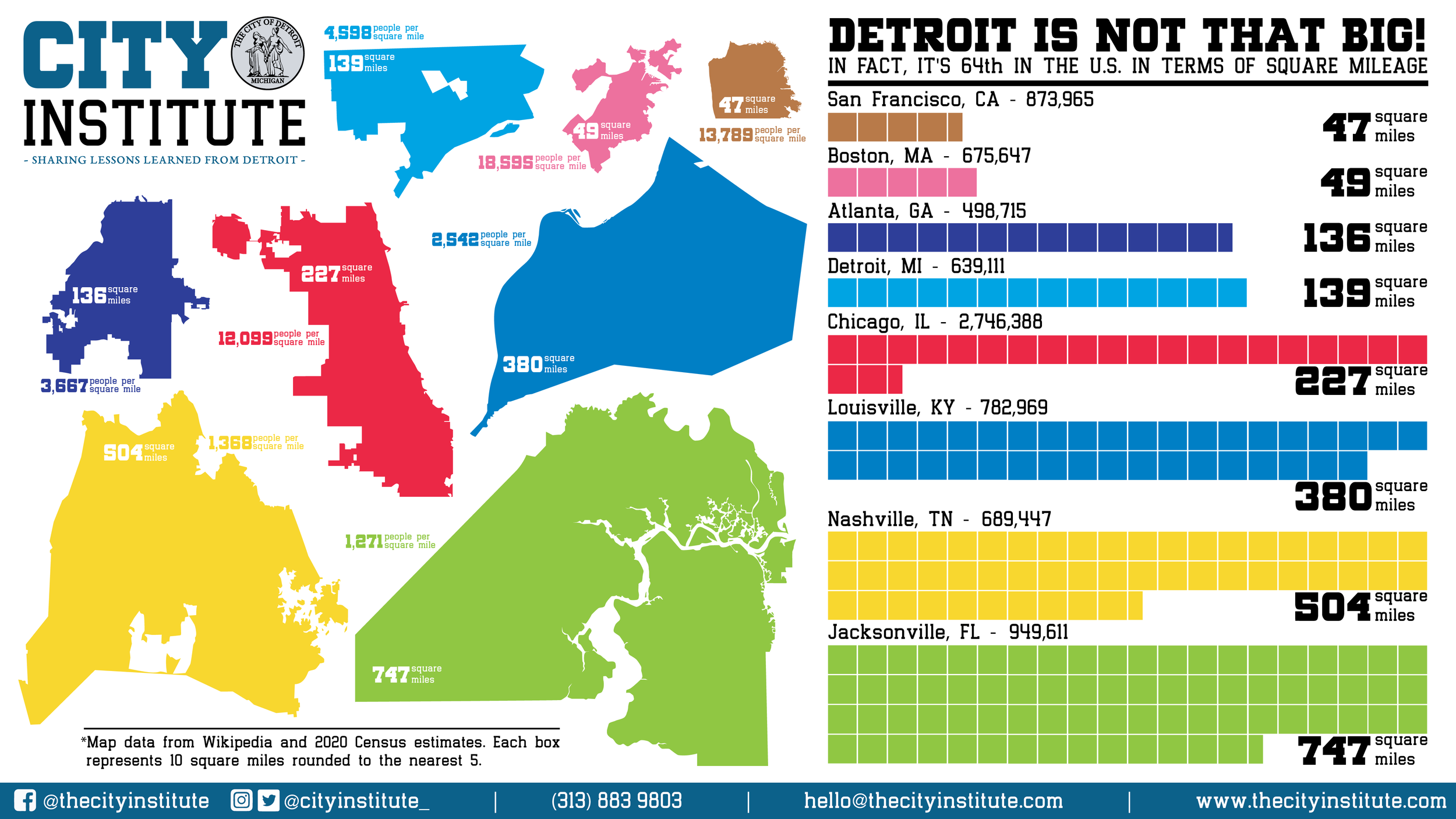
As I research and find out information that surprises me, I feel the need to share it with others. So for years I have been sharing this information with tour attendees, in speeches, on social media and sometimes even with strangers at the bar. Now more than a decade later, and with the help of the awesome Ton Yes! Design, I have my own infographic to share.

Here you can see some other cities and how Detroit compares both in square mileage but also in density (people per square mile).

While this data doesn’t change the fact that Detroit still has challenges related to vacant land (estimates are between 24 and 40 sq. mi.), what it does do is provide some context so people can better understand and be better equipped to work together towards the solutions. A more holistic and deeper understanding of the situation is so important because if we think the problem is too big to solve, as was alluded to by the original infographic, then some might ask why even bother trying? 

Others keep working to move Detroit forward no matter what. Detroit it is fortunate to have organizations and individuals working on innovative and equitable solutions everyday and each one of them knows the truth: that Detroit is more than data and it’s a city worth fighting for. 

Detroit in Context

Written by City Institute’s founder Jeanette Pierce, this blog answers frequently asked questions and puts things in context so that city residents, stakeholders, and visitors will have a better understanding of Detroit’s assets, history, and challenges. Check out City Institute’s services for an even deeper dive into these topics HERE.

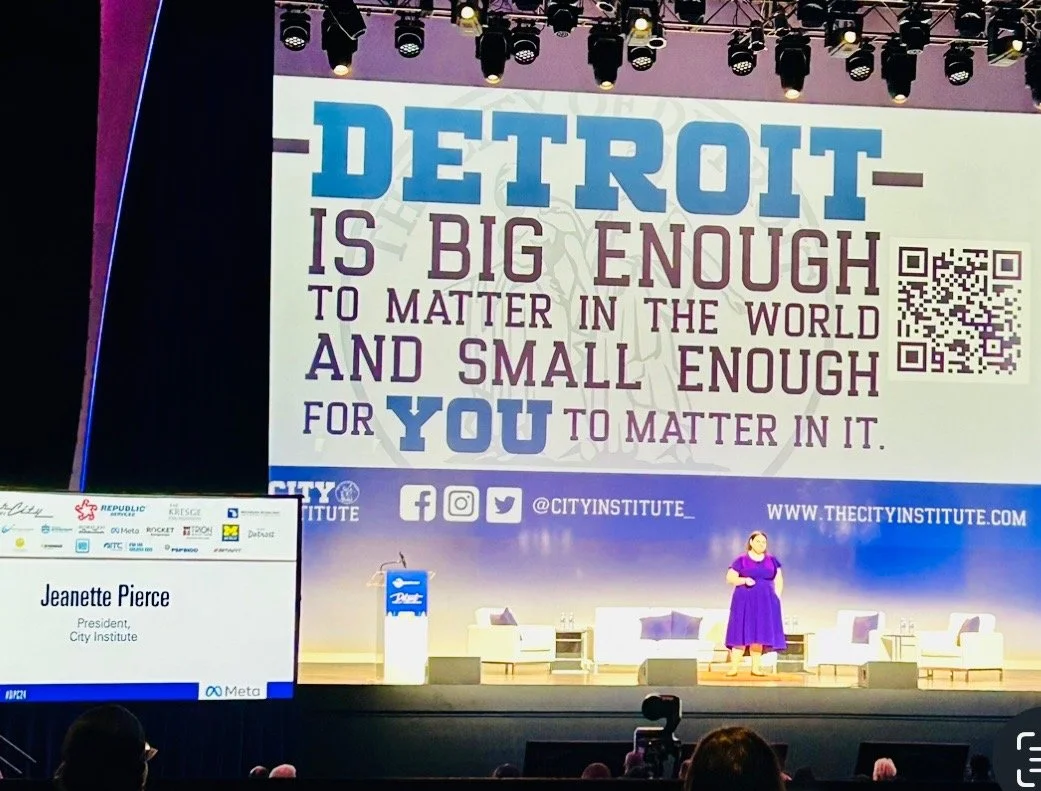
Jeanette Pierce is a lifelong Detroit resident who loves learning and then sharing what she learns with others. She is a data nerd who loves public speaking and challenging prevailing narratives about Detroit. Learn more about her here.
Why Context is Important

Detroit more than any other city has been defined in the minds of much of the world by the headlines, the memes, and the videos they’ve seen from afar. Or by the sporting events, concerts and museums they’ve visited briefly. The world thinks they know Detroit but it’s impossible to know a place without going beyond the headlines, stereotypes, and brief encounters.

None of those things explain Detroit. None of them offer a true understanding of how Detroit got to where it is today, what’s happening now, and where it’s headed in the future.

Context is important because people, places, and projects don’t exist in a vacuum. Knowing that a young chef purchased an abandoned building and opened an award-winning restaurant is only part of the story. Why was the building abandoned in the first place? Who lives in the neighborhood the restaurant is in? How does this one story fit into the larger story of the city? Knowing the answers to these questions helps connect the dots. Helps connect the past with the present. Land-use policies with social justice issues. The story with the context. 

New and longtime residents of Detroit learn about both the historical and present businesses in East English Village.

Context isn’t only important for outsiders and newcomers. Longtime Detroit residents have the most to gain from learning more about their city. From assets like parks, events, and neighborhood businesses to the history behind the city’s challenges, both big and small. Knowing more about the past can help us understand the present and become better equipped to engage in the future. 

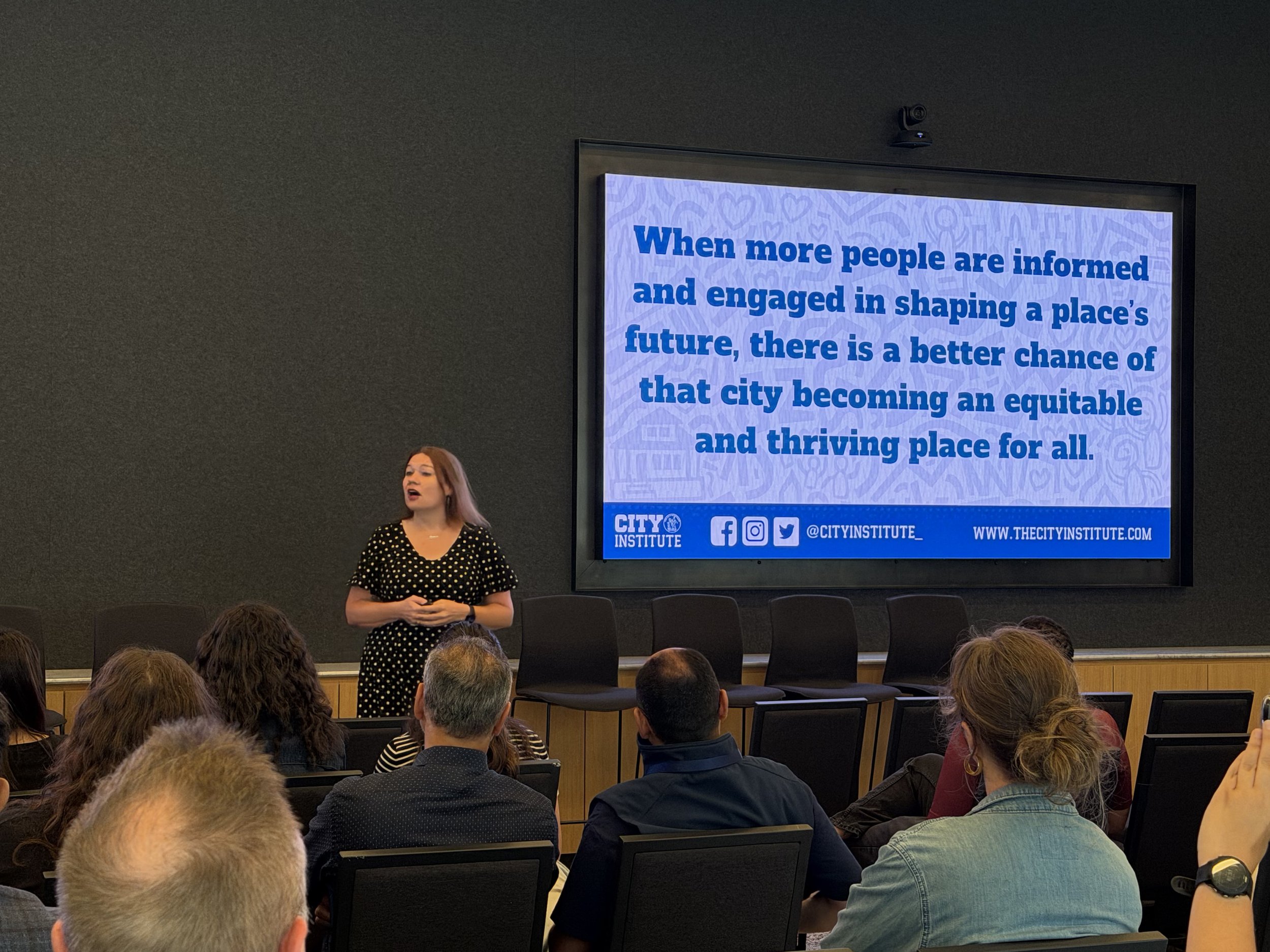
When more people are informed and engaged in shaping a place’s future,  there is a much better chance of that city becoming an equitable and thriving place for all. 

On this blog,  I will provide insights and put things in context as I take you around the city and throughout the decades in order to help locals and stakeholders understand how Detroit’s history shaped where we are today, connect with what’s happening now, and be inspired to take an active role in creating an equitable and thriving city in the future. 

Why City Institute

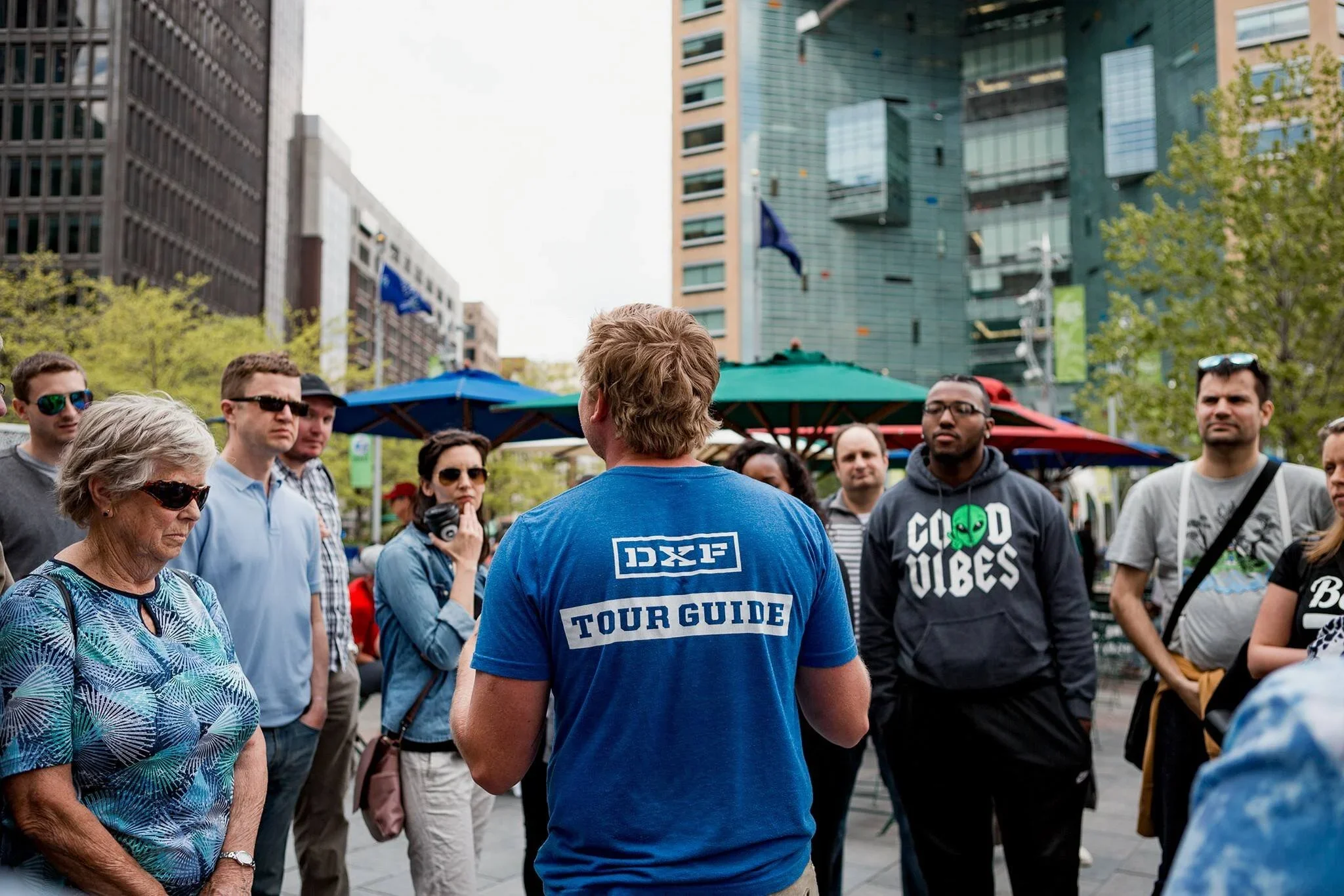
Many people who know me have told me that I should change my middle name to context because it’s such a part of who I am and what I do. It was the reason why in 2006 I co-founded a grassroots nonprofit that used tours to take locals and visitors beyond the headlines to educate them about Detroit’s history, culture, and community. That organization evolved into the Detroit Experience Factory (DXF) which uses immersive storytelling to connect locals and visitors to Detroit’s people, places, and projects. Almost 150,000 people have taken tours since 2006 to learn about Detroit’s assets, small businesses, historic neighborhoods, city planning and development policies, and innovative solutions to the challenges the city faces. Our focus was always on locals and most tour attendees actually live in Detroit and Southeastern Michigan. As a lifelong resident myself, I realized that although we can know a lot about our home from our daily life, there is always so much more to learn about where you live. The knowledge locals gain leads to a domino effect of positive impact as more people support small businesses, public institutions, community projects, and nonprofits they learned about. 
As organizations and cities sought customized intensive engagements to learn, innovate and problem-solve, the City Institute concept was incubated inside of DXF while I created a set of services that went beyond those offered by DXF.   I’ve worked with clients such as Harvard Loeb Institute, State of Oregon, City of Akron, City of Graz, Salesforce Executive Leadership, Challenge Detroit Fellows, and Detroit Revitalization Fellows to build experiences that leveraged my knowledge and relationships to share lessons learned from Detroit and put those lessons learned into context. 

As Detroit continues to grow and evolve so do its needs. Finding clarity during the crises of 2020, I saw a need for a deeper understanding of Detroit focusing on how we got to where we are today and how we can work towards becoming a thriving and equitable city. The need to remind the world that Detroit’s people, places, and projects exist has given way to the importance of reminding the world that Detroit (and Detroiters) have always been here doing the work. The only way to equitably engage in Detroit is to understand the bigger picture - to understand Detroit in context. 

That’s why I officially launched the City Institute in 2021: to focus on providing that deeper contextual understanding to locals and stakeholders in Detroit, to connect the dots between the past & present, and to better equip people to engage in and shape Detroit’s future. 

While my heart is always in Detroit,  I realized that the lessons learned here can be shared with communities across the globe. That’s why the City Institute offers services that have even expanded beyond Detroit to help other cities learn how to tell their stories in order to attract and retain talent, engage and inspire residents, promote small businesses and build thriving and equitable communities. 

City Institute services include:

  • Learning Journeys: deeper dive tours and experiences that include in-person or virtual site visits, panel discussions, and case studies to share best practices

  • City Experience Consulting: helping communities craft contextual storytelling experiences and resources that connect locals and newcomers to the people, places, and projects that make each city unique

  • Speaking Engagements and Workshops led by Jeanette Pierce

  • Private Group Tours - understand Detroit on a deeper level whether you’ve been here a day or a lifetime. Choose from our catalog of virtual and in-person experiences or customize your itinerary to fit the needs of your group.

  • Discuss Detroit - conversations with small business owners, community leaders, and Detroit residents about the work they do in the city we love.

These services will complement existing Detroit Experience Factory programming including the public programming and resources people love like in-person tours,  virtual live and streaming tours, downloadable checklists, and resources for living, working, and engaging in Detroit.

When more people are informed and engaged in shaping a place’s future,  there is a much better chance of that city becoming an equitable and thriving place for all.

GDYT Experiences Detroit

Powered by:

Through the many ups and downs that Detroit and its communities have endured, the one thing that has stayed constant is the ability of Detroiters to find creative solutions to the challenges they face, discover joy in the simple things, and work together to have a positive impact on where they live.

We are excited to be partnering with Grow Detroit’s Young Talent (GDYT), Connect Detroit, and Bank of America for the first-ever GDYT Experiences Detroit Powered by Bank of America launching July-August 2021. In this engaging, interactive virtual tour series, over 5,000 Detroit youth will get to go beyond the headlines and learn about a side of Detroit that is often unknown even by its own residents. 

From unique small businesses, art galleries, specialty restaurants, and shops to world-renowned architecture and cultural institutions, historic neighborhoods, and unparalleled public spaces, Detroit is full of unique assets that make it an amazing place to call home. Through 25 one-hour-long tours covering 5 separate tour themes, this series will also highlight the amazing entrepreneurs, artists, community leaders, and inspirational youth that are having a positive impact on Detroit every day. 

Tour themes include:

  • Detroit’s Finest Features

  • Detroit Businesses and Entrepreneurs of Color

  • Detroit’s Community-Based Organizations and Social Activists

  • Detroit’s Art and Artists

  • Detroit’s Young Leaders

After experiencing Detroit through this virtual tour series, these Detroit youth will see their city in a new light and be excited and informed about living, working, and engaging in Detroit today and in the future.